
About KoRES
What is KoRES?
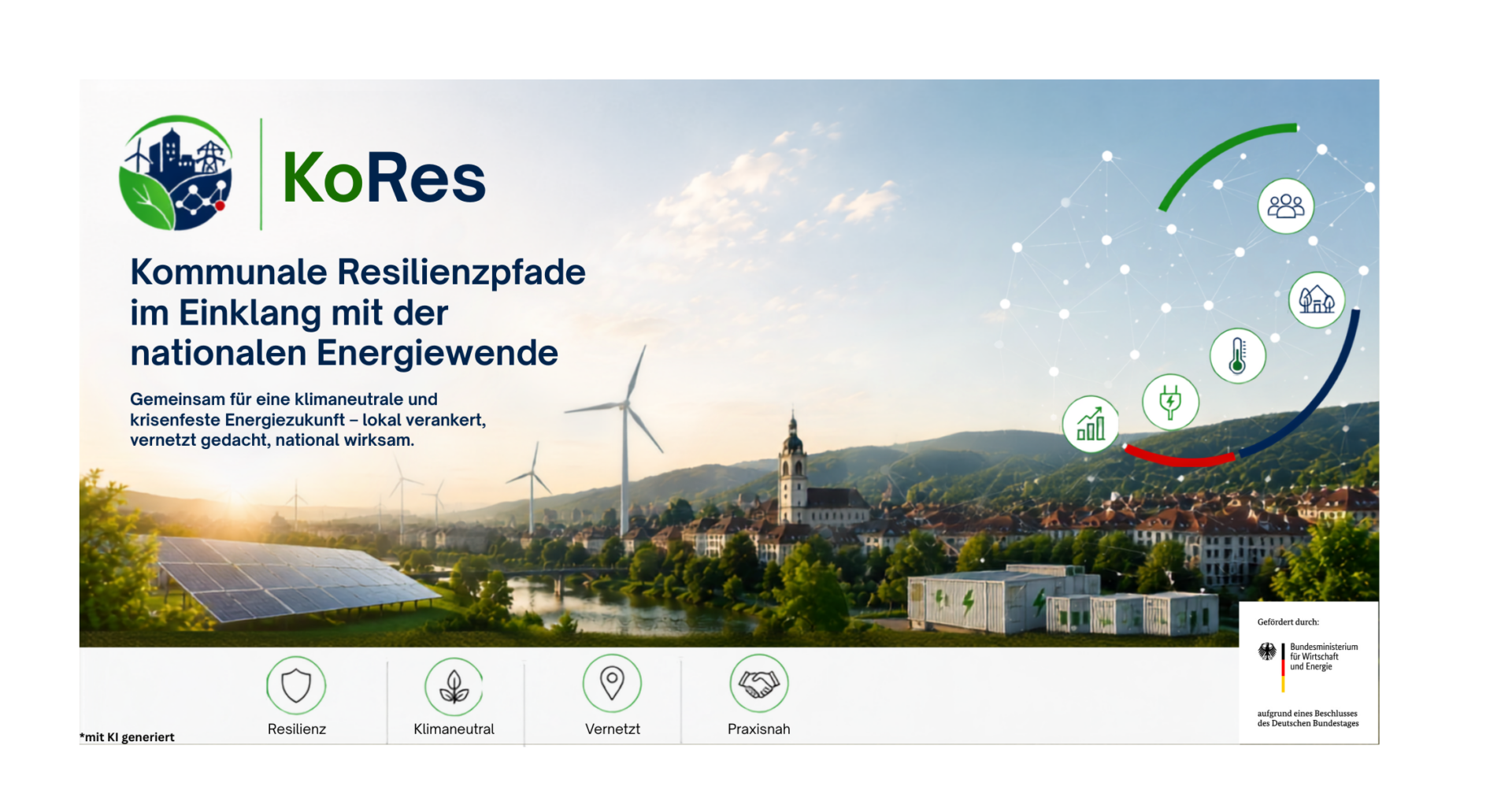
In German, KoRES stands for "Municipal Resilience Pathways in Alignment with Germany's National Energy Transition."
What does the KoRES project do?
The KoRES project brings together the IEN, E2G, and EEW research groups of the Institute for Sustainable Energy Systems (INES) at Offenburg University of Applied Sciences, Kehl University of Applied Sciences, Greenventory GmbH, and the City of Offenburg to develop methods and tools for planning climate-neutral and resilient energy systems.
Offenburg University of Applied Sciences is responsible for the further development of the MyPyPSA-Ger energy system model and the integration of national and municipal energy system models. Greenventory GmbH develops methods for spatial data analysis and a digital twin for risk and resilience assessment. The City of Offenburg contributes practical use cases and develops strategies for resilient energy supply under crisis conditions. Kehl University of Applied Sciences investigates the economic, legal, and societal framework conditions and derives policy recommendations for public authorities and decision-makers.
The project's objective is to develop robust transformation pathways and practical measures for a secure, climate-neutral, and resilient energy system while supporting municipalities in implementing these solutions.
What is the motivation?
The energy transition is increasing the complexity of the energy system through decentralization, sector coupling, and the integration of new energy carriers such as hydrogen. At the same time, risks arising from climate change, extreme weather events, cyberattacks, supply chain disruptions, and geopolitical crises are becoming more significant. Municipalities, in particular, face the challenge of ensuring a secure and reliable energy supply, even under crisis conditions.
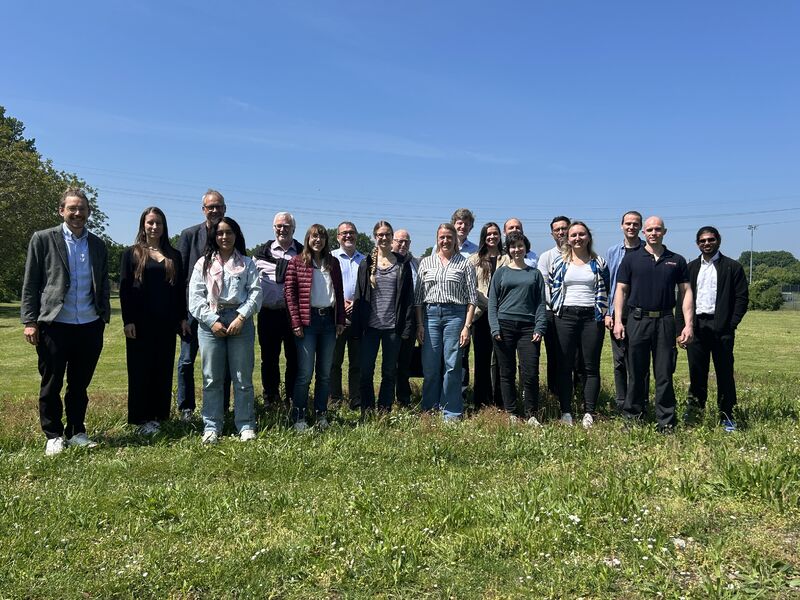
From left to right: Manuel Lämmle (HSO), Nina Kulawik (HSK), Hansjörg Drewello (HSK), Asma Belkacem (HSK), Erwin Drixler, Judith Pallàs Solà (HSO), Michael Schmidt (HSO), Lena Ritzinger (HSO), Bernhard Bürkle (MHD), Anna Sandhaas (HSO), Niklas Hartmann (HSO), Natalie Miller (SOG), Verena Krall (GRE), David Fischer (GRE), Yamit Ibarra Suarez (SOG), Sarah Olbrich (GRE), Jonathan Quiring, Philipp Eckstein, Aqib Rizal Thennadan (HSO)
Image source: Hochschule Offenburg
Partners

Founded in 2019, Greenventory GmbH (GRE) is a software and data company specializing in the geospatial planning of integrated energy systems.
Its core technology is a cloud-native digital twin platform that enables the modular integration of large and diverse datasets, including satellite imagery, geospatial data, official statistics, and energy network data.

Offenburg University of Applied Sciences (HSO) has six publicly recognized research profiles, including "Sustainable Energy Systems". Its interdisciplinary Institute for Sustainable Energy Systems (INES) brings together 11 professors and their research teams across more than 30 research and development projects covering topics such as battery technology, electromobility, energy economics, photovoltaics, smart grids, and biochar.
Kehl University of Applied Sciences (HSK) is a research-intensive University of Applied Sciences specializing in public administration, with approximately €2.5 million in annual research funding. Its research focuses on the areas of "Climate, Energy and Environment" and "Innovation Systems and Policies".
Within these fields, the university has successfully carried out numerous research projects addressing the legal and administrative aspects of the energy transition as well as the resilience of public administration.
W: h-ka.de

The City of Offenburg, which has set the goal of achieving climate neutrality by 2040, has extensive experience in climate protection, energy management, and the implementation of innovative pilot projects, including CO2InnO and baum2og. The city contributes data, governance expertise, and implementation experience to the project. Within KoRES, Offenburg University of Applied Sciences is responsible for energy system modeling, resilience indicators, and model validation, while the software partner develops the software, interfaces, and integration with the digital twin. Together, the project partners are developing practical and scalable solutions to strengthen the resilience of municipal energy systems.